Source Galvanizing Scaffolding Lock Pin for Frames, Braces, Props
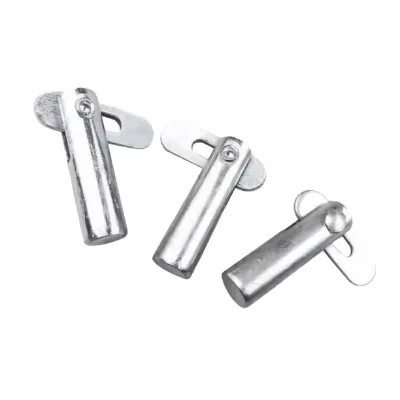
Explore 30 listings for galvanizing scaffolding lock pin options including steel grades Q235 and Q195. Buyers can compare specifications like D12*45, D14*50, and surface finishes such as hot dip galvanizing or powder coating for various scaffolding systems.
Key considerations
Products List




Comprehensive Sourcing Guide
Strategic Sourcing Guide for Galvanizing Scaffolding Lock Pins
The global construction industry relies heavily on the integrity of temporary access structures, where the locking mechanism serves as the critical junction point for safety. When sourcing galvanizing scaffolding lock pins, buyers must navigate a complex landscape of material grades, surface treatments, and dimensional standards. This guide provides a disciplined approach to evaluating suppliers and products, ensuring that procurement decisions are grounded in verifiable facts rather than marketing assertions. The focus remains on the specific attributes of the lock pin, its integration into frame scaffolding systems, and the rigorous quality controls necessary for high-risk construction environments.
Technical Specifications and Material Composition
The foundational requirement for any scaffolding lock pin is the material composition, which dictates its load-bearing capacity and resistance to environmental degradation. Based on observed product data, the primary steel grades utilized in this category include Q195, Q235, and Q355b. These grades represent a spectrum of tensile strength and ductility, with Q235 being a common baseline for general construction applications. The specific selection of steel grade often correlates with the intended load class of the scaffolding system. For instance, heavier-duty applications may necessitate Q355b, while standard frame scaffolding often utilizes Q235 or Q195.
Dimensional precision is equally critical. The supply chain data indicates a variety of standard models and dimensions, such as D1245, D1250, D14*50, and specific model identifiers like D232, SLP01, TR1188, and TR1189. These alphanumeric codes often correspond to specific diameter and length requirements tailored to different frame types, including Main Frames, H Frames, and Walk Thru Frames. Buyers must verify that the pin dimensions match the hole specifications of the specific scaffolding frames they are deploying. A mismatch in diameter can lead to excessive play, compromising the structural rigidity of the joint.
The surface treatment process is a defining characteristic of the "galvanizing" aspect of the keyword. The observed data highlights two primary finishing methods: Hot DIP Galvanizing and Pre-Galvanized treatments, with some suppliers offering Powder Coated options. Hot DIP Galvanizing is generally preferred for external scaffolding due to its superior corrosion resistance, providing a thick zinc coating that protects the steel core from rust in harsh weather conditions. The choice between Pre-Galvanized and Hot DIP often depends on the project duration and the environmental exposure of the site.
Compliance, Certification, and Standard Verification
In the scaffolding industry, compliance with international and regional standards is non-negotiable. The supplied facts reference specific standards such as EN74-1, BS1139, and AS1576. These standards govern the mechanical properties, dimensional tolerances, and testing procedures for scaffolding components. When evaluating a supplier, buyers must request evidence that the lock pins have been manufactured and tested in accordance with these specific standards. It is important to note that while ASTM A123 and ISO 1461 are often associated with hot-dip galvanizing processes, the primary product standard for the pin itself remains EN74-1 or its regional equivalents.
The verification process should extend beyond a simple claim of compliance. Buyers should demand test reports that explicitly reference the standard number and the specific test results for the lock pin. This includes tensile strength tests, hardness tests, and coating thickness measurements. The data indicates that some products are listed with "custom" standards, which requires a heightened level of scrutiny. In such cases, the buyer must define the technical requirements clearly in the purchase order and ensure the supplier's quality assurance protocol aligns with these bespoke specifications.
Furthermore, the origin of the product plays a role in regulatory compliance. The observed data points to Hebei, China, as a significant production hub. While this location is a major source of steel products, buyers must ensure that the specific factory has the necessary certifications to export to their target market. The presence of standards like EN74-1 suggests a European market orientation, while AS1576 indicates Australian compliance. Understanding the regulatory landscape of the destination country is essential to avoid customs delays or safety violations on-site.
Cost Drivers and Economic Factors
The pricing of scaffolding lock pins is influenced by several dynamic factors, primarily raw material costs, surface treatment complexity, and order volume. The observed price range in the market spans from 0.01 to 1200 USD, a wide variance that reflects differences in unit price versus bulk lot pricing, as well as variations in product specifications. The Minimum Order Quantity (MOQ) is another significant cost driver, with observed ranges from 1 to 10,000 units. Suppliers often offer tiered pricing structures where the unit cost decreases significantly as the order volume increases.
Surface treatment is a major component of the cost structure. Hot DIP Galvanizing is more expensive than Pre-Galvanized or Powder Coated finishes due to the energy-intensive process and the higher consumption of zinc. Buyers must weigh the initial cost against the lifecycle cost of the product. In coastal or high-humidity environments, the premium for Hot DIP Galvanizing is often justified by the extended service life and reduced maintenance requirements. Conversely, for short-term indoor projects, a less expensive finish may suffice.
Packaging also impacts the final landed cost. The data shows options such as Ton Bags, Pallets, Bags, or Bundles. Efficient packaging reduces shipping volume and protects the product from damage during transit. However, specialized packaging solutions may incur additional charges. Buyers should calculate the total cost of ownership, including shipping, handling, and potential losses from damaged goods, rather than focusing solely on the unit price.
Typical Applications and Structural Integration
Scaffolding lock pins are integral components of various scaffolding systems, serving as the primary fastening mechanism for connecting frames and braces. The observed data categorizes these applications under "Combined Scaffolding," "Frame Scaffolding," and "Multi-Pole Scaffolding." The lock pin is specifically designed for use in external scaffolding, where it secures the horizontal and vertical members to create a stable working platform.
The specific structural style of the scaffolding dictates the type of lock pin required. For "Doors Scaffolding" and "H Frame Scaffolding," the pins must fit precisely into the designated coupling points. The data mentions "Scaffolding Frames" and "Scaffolding Props" as related parts, indicating that the lock pin is part of a larger ecosystem of components including cross braces, base jacks, castors, catwalks, and staircases. The compatibility of the lock pin with these auxiliary components is crucial for the overall stability of the structure.
In terms of erection position, the lock pin is predominantly used for external scaffolding, supporting the weight of workers, materials, and equipment. The "Projecting Scaffolding" and "Horizontal mobile Scaffolding" modes highlight the versatility of the system. The lock pin must withstand dynamic loads generated by movement and shifting weights. Therefore, the design of the pin, often referred to as a "Scaffolding Lock Pin" or "Joint Pin," must ensure a tight fit that prevents slippage under load.
Supplier Evaluation and Quality Assurance
Selecting a reliable supplier requires a multi-faceted evaluation strategy. The first step is verifying the supplier's production capabilities. The data indicates that customization is available, which is a positive sign for suppliers capable of adapting to specific project needs. However, buyers should assess the supplier's capacity to maintain consistency across large production runs. The observed models, such as UTM-TP-178 and Frame Scaffolding, suggest a range of product lines, but the buyer must confirm that the specific lock pin model is a core product rather than an afterthought.
Quality control processes are paramount. Buyers should inquire about the supplier's internal testing protocols. Do they perform random sampling tests on every batch? Are the coating thickness measurements verified using calibrated equipment? The "Hot DIP Galvanized" finish, in particular, requires strict control over the dipping time and temperature to ensure the zinc coating adheres properly and meets the required thickness. A lack of rigorous QC can lead to premature corrosion, which poses a significant safety risk.
Transparency regarding the origin and material grade is another key evaluation criterion. While the data lists Hebei as a common origin, buyers should request specific factory details to verify the source of the steel. The distinction between Q195, Q235, and Q355b is not merely semantic; it represents a fundamental difference in material performance. A supplier that cannot clearly articulate the steel grade and its corresponding mechanical properties should be viewed with skepticism.
Long-Term Procurement and Lifecycle Management
Procuring scaffolding lock pins is not a one-time transaction but part of a long-term lifecycle management strategy. The durability of the product directly impacts the operational efficiency of construction projects. Galvanizing provides a protective barrier that extends the service life of the pin, but the quality of the galvanizing process determines how long this protection lasts. Buyers should consider the frequency of replacement and the cost of downtime associated with equipment failure.
Inventory management is another consideration. Given the wide range of MOQs, from 500 pieces to 10,000, buyers must balance the need for immediate availability with the cost of holding inventory. For large-scale projects, a just-in-time delivery model may be preferable, while for smaller contractors, bulk purchasing might offer better economies of scale. The packaging options, such as Ton Bags or Pallets, should be selected based on the storage capabilities of the buyer's warehouse.
Finally, the adaptability of the product to future projects is a key factor. The availability of customization allows suppliers to produce pins that meet evolving safety standards or specific design requirements. Buyers should establish a relationship with a supplier that can scale production and adapt to new standards as they emerge. This ensures a consistent supply chain and reduces the risk of sourcing incompatible components in the future. By focusing on these long-term considerations, buyers can secure a reliable supply of high-quality scaffolding lock pins that support safe and efficient construction operations.
FAQs
What steel grades are used for galvanizing scaffolding lock pins?
Common steel grades include Q195, Q235, and Q355b depending on load requirements. Q235 is standard for general construction, while Q355b supports heavier duties. The specific grade must match the scaffolding system's safety standards.
Which surface treatments are available for these lock pins?
Available finishes include Hot DIP Galvanizing, Pre-Galvanized, and Powder Coated options. Hot DIP Galvanizing offers superior corrosion resistance for external use. The choice depends on project duration and environmental exposure conditions.
Can I find lock pins that meet EN74-1 and BS1139 standards?
Yes, products are available that comply with EN74-1, BS1139, and AS1576 standards. Buyers must verify test reports confirming these specific standards. Custom standards are also possible but require clear technical definitions in the order.
How do I select the correct dimensions for my scaffolding frames?
Select pins based on specific models like D12*45, D12*50, or D14*50 to match frame holes. Models such as D232, SLP01, and TR1188 correspond to different frame types. Mismatched diameters can compromise structural rigidity and safety.
What is the typical minimum order quantity for these pins?
Minimum order quantities range from 1 to 10,000 units depending on the supplier. Some listings specify an MOQ of 500 pieces for specific models. Bulk purchasing often reduces the unit cost significantly compared to smaller orders.
Where are these scaffolding lock pins typically manufactured?
Production hubs are located in Hebei, China, which is a major source for steel products. Buyers should verify specific factory details to ensure export compliance. The origin influences regulatory adherence for target markets like Europe or Australia.